ChemFORWARD and Z2Data Demonstrate a New Approach to Chemical Hazard Visibility at Scale
July 21, 2026, Durham, NC - A collaboration between ChemFORWARD and Z2Data is unlocking a powerful new approach to understanding chemical risk and opportunity across global supply chains.
Originally established in 2025 to integrate chemical hazard assessments into Z2Data’s Compliance Manager, the partnership has expanded its capabilities to apply hazard-based evaluations to large-scale, aggregated data. By combining Z2Data’s robust component and supplier databases with verified, substance-level hazard data from the Chemical Hazard Data Trust, managed by ChemFORWARD, the two organizations recently conducted a pilot analysis.
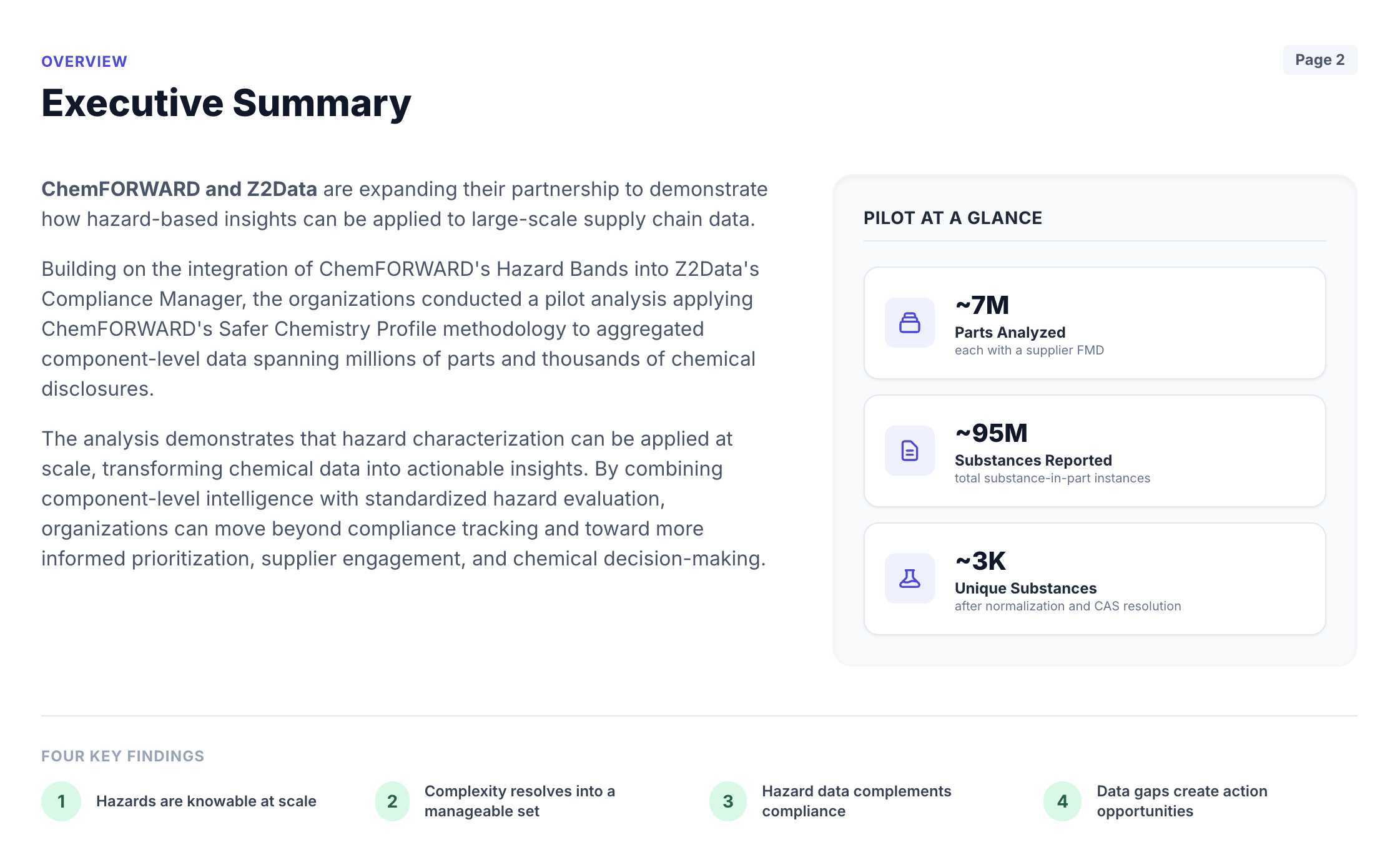
This pilot applied ChemFORWARD’s Safer Chemistry Profile (SCP) methodology across a cross-industry dataset spanning approximately 7 million parts and 95 million substances reported. The result is a proactive, forward-looking tool that transforms compliance data into actionable insights.
Key Insights from the Pilot Analysis:
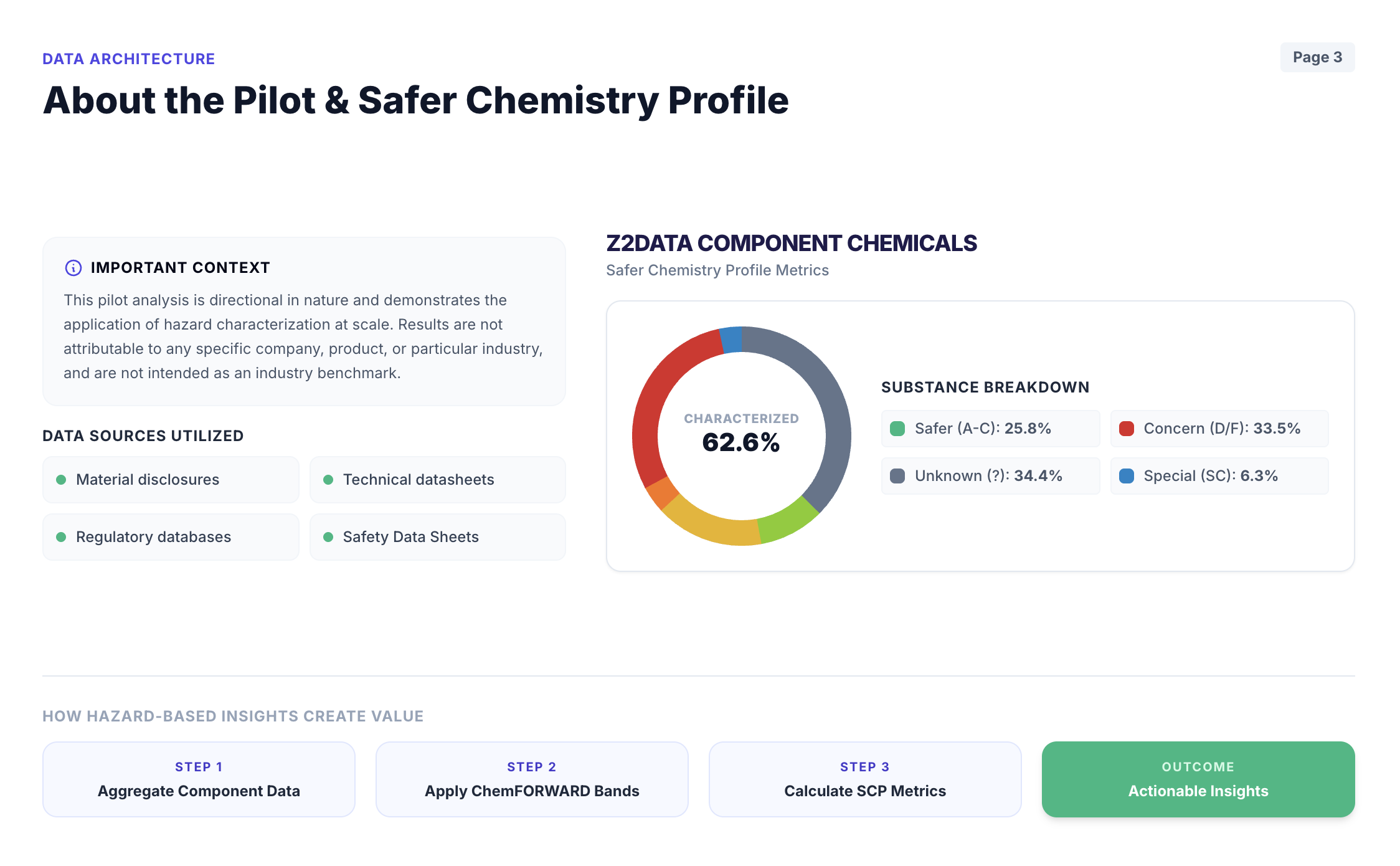
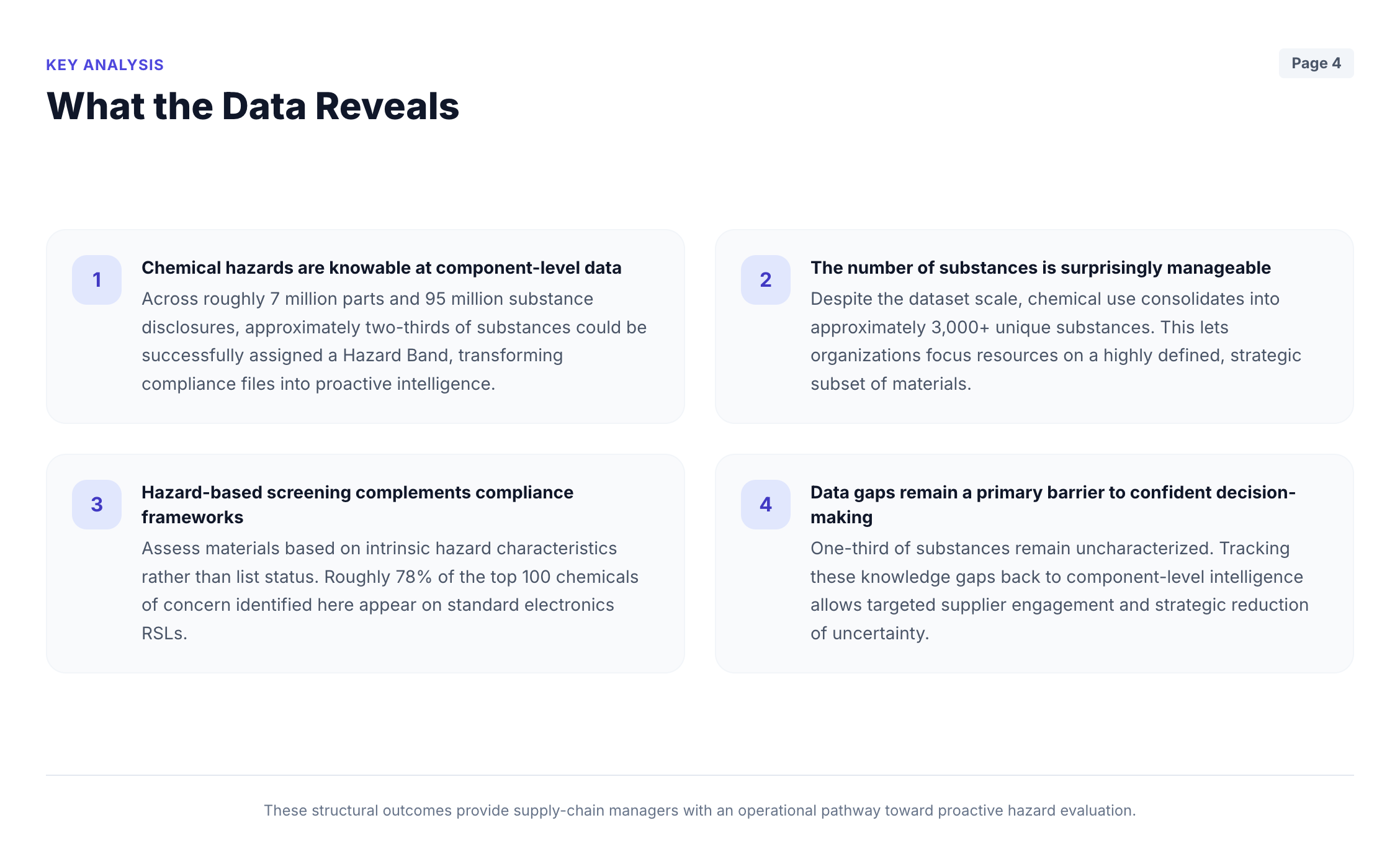
Chemical hazards are knowable at the component level: Roughly two-thirds (62.6%) of the substances in the massive dataset could be successfully assigned a Hazard Band, proving that hazard characterization can be achieved broadly at scale.
Chemical complexity resolves into a manageable set: While evaluating millions of parts sounds daunting, the data reveals that chemical use de-duplicates and consolidates into a highly tractable set of just over 3,000 unique substances. This creates a massive opportunity for organizations to concentrate their substitution and risk management efforts where they will have the greatest system-level impact.
Screening expands visibility beyond basic compliance: Instead of relying solely on binary "listed or not listed" regulatory frameworks, hazard-based screening evaluates substances based on their holistic, intrinsic hazard characteristics. This screening method strengthens current regulatory compliance while empowering design teams to detect looming threats much earlier. For example, the analysis found that 78% of the primary 100 chemicals identified as high-priority concerns are already featured on consumer electronics Restricted Substances Lists (RSLs)..
Proactive hazard mapping prevents regrettable substitutions: By identifying that higher-hazard (D/F) substances make up 33.5% of the dataset, the framework allows organizations to distinguish lower-hazard options from higher-hazard alternatives before making design changes. Accessing these verified hazard insights upfront ensures that teams move away from known chemicals of concern without inadvertently swapping them for unmapped, equally hazardous alternatives.
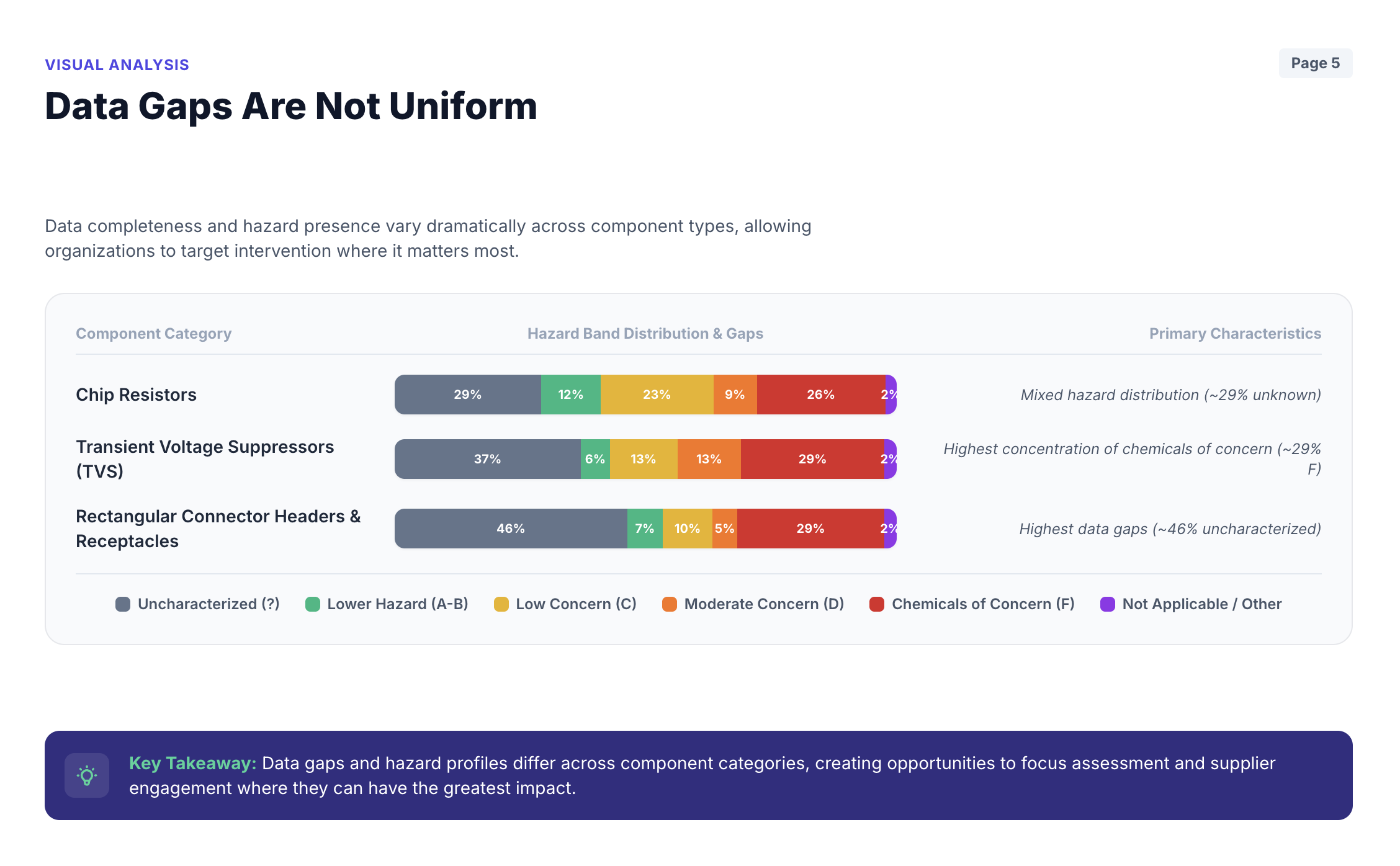
Data gaps become traceable and actionable: Across the dataset, 34.4% of substances remain uncharacterized due to insufficient data. However, when mapped directly to Z2Data’s component intelligence, these gaps stop being abstract unknowns; they map to specific parts, categories, and suppliers, allowing organizations to systematically target and reduce uncertainty.
Moving From Insight to Action
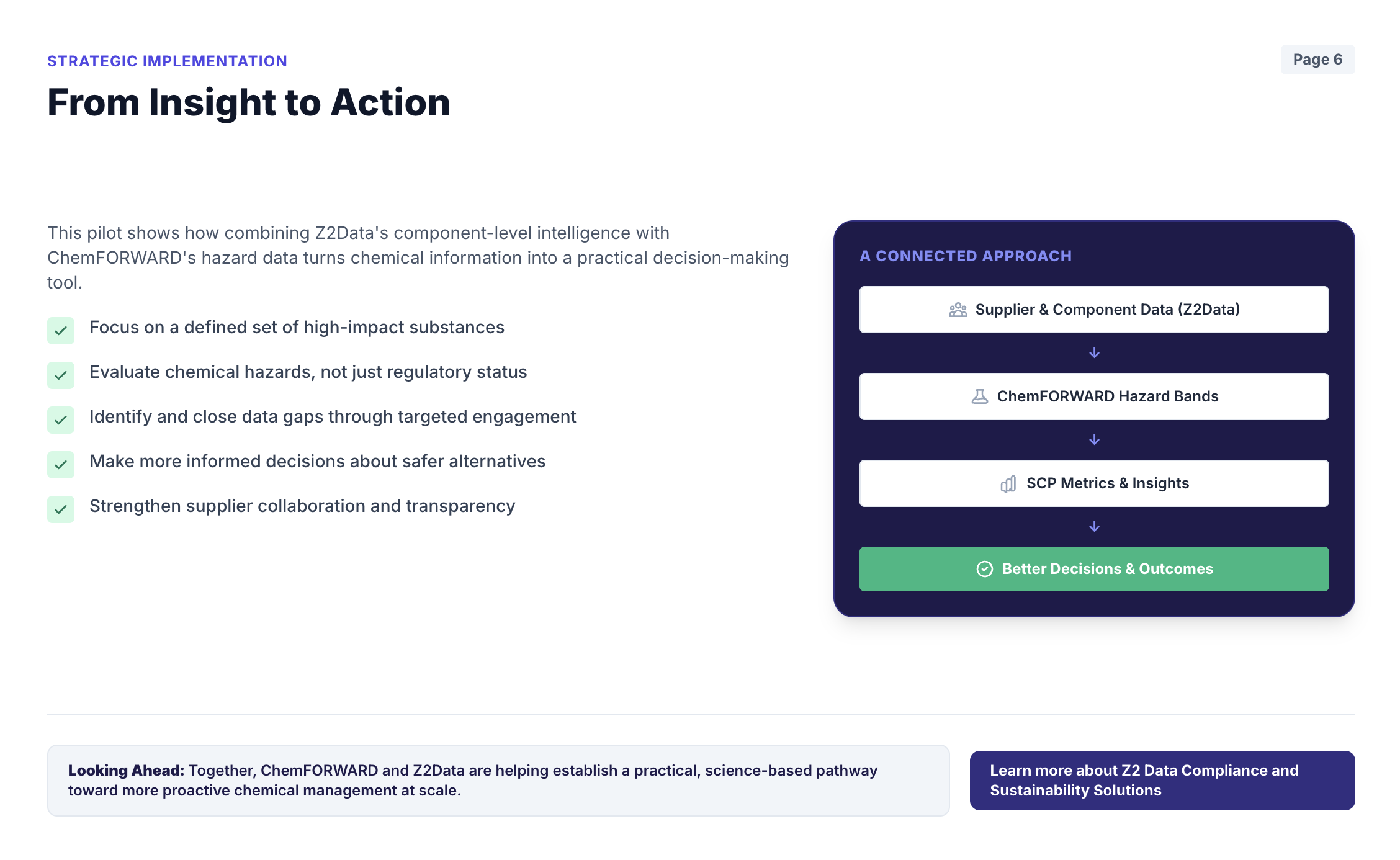
At scale, this integrated capability shifts chemical management away from reactive tracking for compliance and toward proactive prioritization for action, enabling safer chemistry decisions across products, components, and teams.
To review the findings, explore the dataset methodology, and see how hazard-based workflows can be incorporated directly into your processes, view the summary report here: https://chemforward-z2data.netlify.app/